MWC 2026 Highlights the Rise of AI Agent Security in Enterprise AI

TL;DR
MWC 2026 confirms that autonomous AI agents are becoming embedded in telecom and enterprise infrastructure. As enterprise AI adoption accelerates, AI agent security and runtime governance are emerging as critical priorities, with NeuralTrust recognized as a Digital Horizons winner.
MWC 2026 Signals a Turning Point for Enterprise AI
MWC 2026 marked a structural shift in how autonomous AI is positioned within enterprise infrastructure. Across telecom networks, cloud platforms and enterprise systems, AI agents were presented not as experimental copilots but as operational systems capable of orchestrating workflows, optimizing infrastructure and executing multi-step processes in real time.
These autonomous AI agents are now interacting with APIs, retrieving enterprise data, modifying configurations and coordinating tools across distributed environments. As organizations move from AI experimentation to AI deployment at scale, the security implications become significantly more complex.
The industry conversation at MWC 2026 made one thing clear: enterprise AI innovation must now be matched with enterprise AI security.
Why AI Agent Security Became Central at MWC 2026
The architectures showcased at MWC 2026 demonstrate how deeply integrated AI agents have become. Autonomous systems now operate across identity providers, SaaS platforms, telecom infrastructure and cloud orchestration layers simultaneously. They reason probabilistically, adapt to context and dynamically chain capabilities together to accomplish objectives.
Traditional enterprise security frameworks were designed around static users and deterministic applications. Role-based access control assumes predictable behavior within clearly defined permission boundaries. Autonomous AI systems challenge those assumptions.
An AI agent may have legitimate access to multiple systems, yet the way those permissions are combined at runtime can generate unintended outcomes. The emerging risk is not unauthorized access, but ungoverned autonomy inside authorized environments.
This shift is precisely why AI agent security became a central theme at MWC 2026. Organizations are recognizing that controlling access is no longer sufficient. They must also govern decisions.
Security Innovation Recognized at MWC 2026
Within this broader shift toward autonomous AI governance, security innovation was also recognized on stage.
NeuralTrust, the cybersecurity company for AI Agents, was named winner of the Digital Horizons category at MWC 2026, competing against AI security solutions such as DeepKeep, AIM Technologies and Enhance.
This recognition reflects a growing market awareness that enterprise AI security requires purpose-built controls designed specifically for AI agent behavior and runtime decision-making.
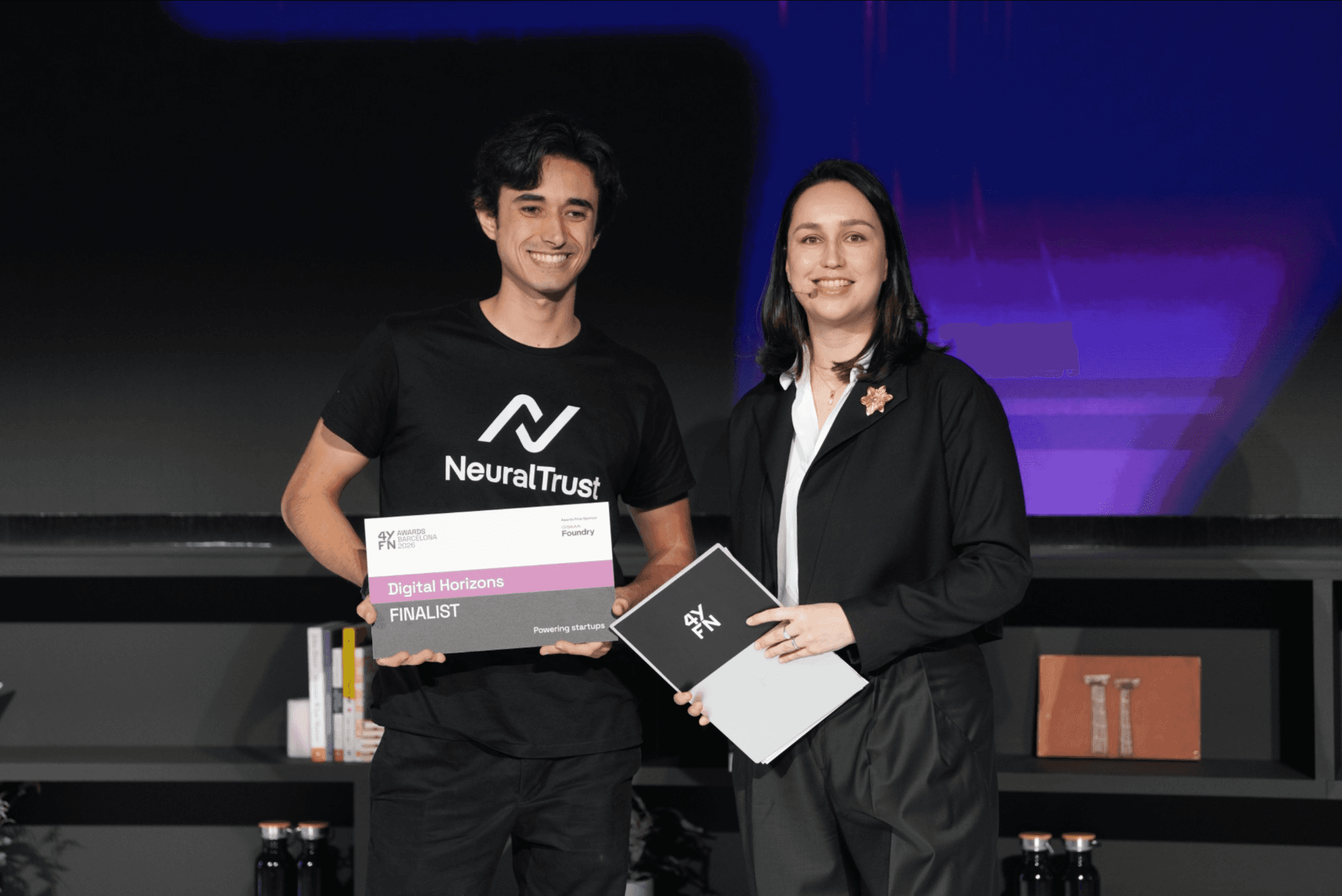
The award underscores a broader market shift. As autonomous AI systems gain operational authority across enterprise infrastructure, runtime governance and contextual authorization are becoming foundational requirements rather than optional safeguards.
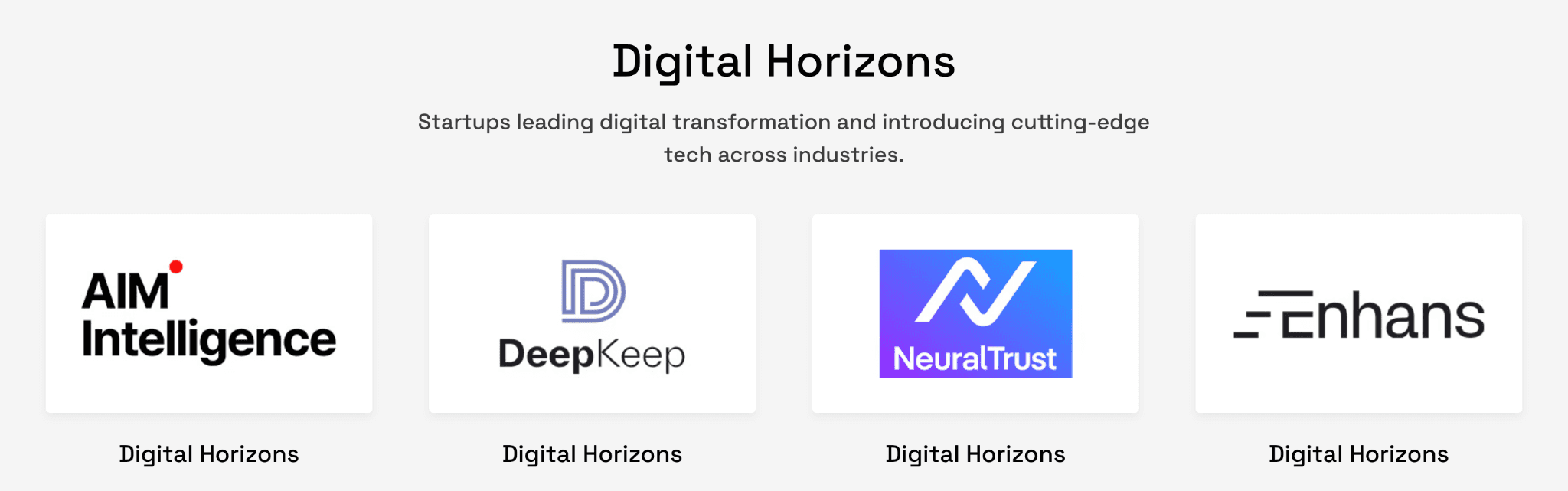
The presence of multiple AI security vendors in the same category reflects how rapidly the AI agent security market is maturing. What was once considered a niche segment is now recognized as a critical layer in enterprise AI architecture.
From Static Permissions to Runtime Governance
One of the most significant discussions emerging from MWC 2026 is the transition from static security controls to runtime governance. Enterprise AI security must evaluate not only whether an AI agent can perform an action, but whether it should perform that action in a given operational context.
Runtime governance introduces contextual authorization, where decisions are validated based on real-time system state, data sensitivity and operational thresholds. This approach reduces the risk of authorized misuse, where an action is technically permitted but strategically unsafe.
In telecom environments, where AI agents influence 5G orchestration, edge deployments and infrastructure optimization, the consequences of inappropriate decisions can propagate rapidly across interconnected systems. Static access control models cannot account for this dynamic complexity.
AI agent security therefore requires continuous monitoring, behavioral validation and execution tracing. Governance must operate at the decision level, not only at the identity level.
Observability and Control Define the Next Phase of Enterprise AI
As autonomous AI systems become embedded in mission-critical enterprise environments, observability becomes foundational. When an AI agent executes a high-impact action, organizations must understand not only what happened but why the decision was made.
Decision tracing, tool usage monitoring and execution path visibility are emerging as essential components of enterprise AI security. Without this level of transparency, incident response teams may see authorized actions in logs but lack insight into the reasoning chain behind them.
MWC 2026 highlighted both the acceleration of autonomous AI adoption and the parallel rise of governance frameworks designed to secure it.
MWC 2026 Confirms the Future of AI Agent Security
MWC 2026 signals the normalization of autonomous AI agents operating at enterprise scale. Telecom providers and enterprises are embedding AI agents into core infrastructure, accelerating automation and operational efficiency.
However, as autonomy expands, systemic risk expands with it. AI agent security is becoming a foundational layer of enterprise architecture.
Organizations that treat AI agents as conventional software components will struggle to manage decision-level risk. Those that implement runtime governance, contextual authorization and continuous monitoring will be positioned to scale enterprise AI safely.
MWC 2026 made the trajectory clear. Autonomous AI is accelerating across industries. Sustainable innovation will depend not only on smarter systems, but on stronger security frameworks designed specifically for AI agents.
Related Posts