Oracle Fusion Agentic Applications: A New Layer of Enterprise Automation

TL;DR
Oracle has introduced 12 new agentic AI applications within its Fusion ecosystem, targeting finance and supply chain operations. These AI agents go beyond simple automation by executing complex, multi-step workflows such as freight procurement and financial crime investigations. The launch signals a shift toward embedded, enterprise-grade agentic systems that operate with context, autonomy, and increasing security implications.
The Shift from Automation to Agentic Execution
Enterprise software is entering a new phase. Traditional automation focused on predefined workflows, rule-based systems, and human-triggered processes. Oracle’s latest announcement signals a transition toward something fundamentally different: agentic execution.
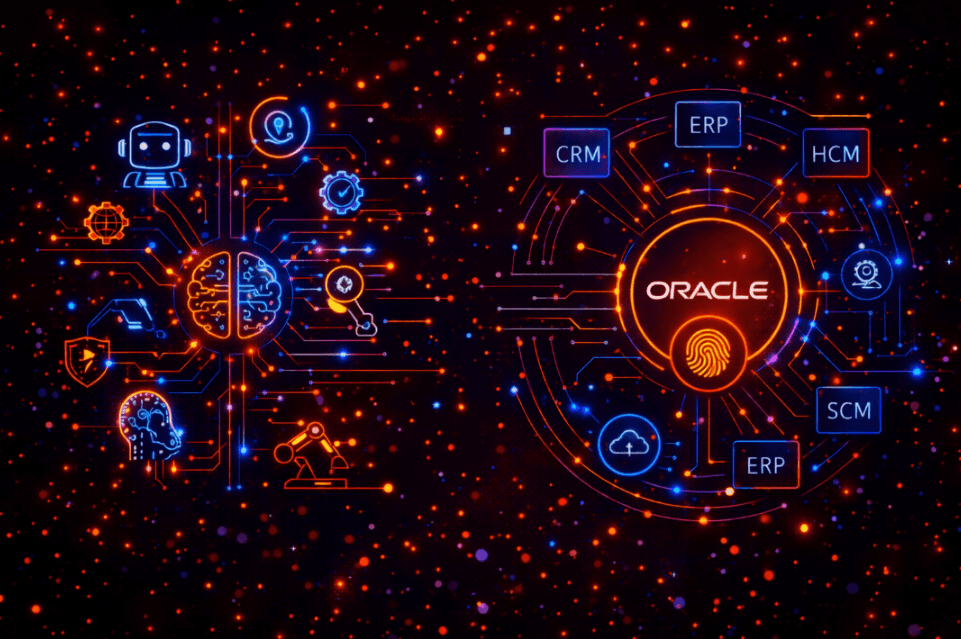
With the launch of 12 AI-powered applications inside Oracle Fusion, the company is embedding autonomous agents directly into core business functions like finance and supply chain. These are not assistants that wait for prompts. They are systems designed to interpret context, make decisions, and execute multi-step tasks with minimal human intervention.
This distinction matters. When an AI system is capable of orchestrating processes such as freight procurement or financial crime investigations, it is no longer a tool. It becomes an operator within the enterprise stack.
What Oracle Actually Launched
Oracle’s new suite of agentic applications is designed to address high-friction, high-complexity workflows that typically require coordination across multiple systems and stakeholders.
Some of the most notable use cases include:
Freight procurement agents that can analyze logistics data, evaluate vendors, negotiate constraints, and execute procurement decisions.
Financial crime investigation agents capable of identifying suspicious patterns, gathering relevant data, and structuring investigative workflows.
Finance operations agents that streamline reconciliation, anomaly detection, and reporting across enterprise systems.
These applications are deeply integrated into Oracle Fusion, meaning they operate with direct access to enterprise data, workflows, and decision layers. This level of integration is what enables them to move beyond surface-level automation into full process execution.
The Role of the AI Agent Store
Alongside these applications, Oracle is introducing an AI Agent Store, positioning it as a centralized environment for discovering, deploying, and managing agentic capabilities.
This is a strategic move. As enterprises begin to adopt multiple AI agents across different functions, the challenge shifts from building agents to managing them at scale. A marketplace-like model suggests a future where organizations can select, customize, and orchestrate agents much like they do with SaaS tools today.
However, this also introduces new layers of complexity. Each agent represents not just functionality, but also access to data, decision-making authority, and potential risk exposure.
Why This Matters for Enterprise AI Security
From a security perspective, Oracle’s announcement reinforces a growing reality: AI agents are becoming part of the enterprise attack surface.
Unlike traditional applications, agentic systems operate with a combination of autonomy, context awareness, and system-wide visibility. This creates new risk vectors that cannot be addressed with conventional security models.
For example, an agent handling financial investigations may have access to sensitive transactional data, internal reports, and decision logic. If compromised, manipulated, or misaligned, the impact is not limited to data leakage. It extends to decision integrity and operational outcomes.
Similarly, supply chain agents executing procurement decisions introduce risks around vendor manipulation, data poisoning, or unintended economic actions.
The challenge is not malicious intent. It is probabilistic behavior operating at scale within critical systems.
Governance Becomes a First-Class Requirement
The introduction of agentic applications inside enterprise platforms like Oracle Fusion makes one thing clear: governance can no longer be an afterthought.
Organizations will need to rethink how they define:
Access control for agents, not just users
Auditability of agent decisions and actions
Boundaries of autonomy, especially in high-risk workflows
Monitoring systems that can detect anomalous agent behavior in real time
This is where traditional IAM and application security models start to break down. Agents do not fit neatly into user roles or service accounts. They require a new abstraction layer that accounts for autonomy, memory, and dynamic decision-making.
The Bigger Picture: Embedded Agents at Scale
Oracle’s move is part of a broader industry shift toward embedding AI agents directly into enterprise platforms. Instead of standalone tools, agents are becoming native components of business systems.
This has two major implications.
First, adoption will accelerate. When agentic capabilities are built into platforms that enterprises already use, the barrier to entry drops significantly. Organizations do not need to build from scratch. They can deploy and scale quickly.
Second, the security gap will widen if governance does not keep pace. As more agents are deployed across finance, supply chain, and operations, the complexity of managing them grows exponentially.
The Rise of Agentic Enterprise Platforms
Oracle Fusion Agentic Applications represent more than a product launch. They are a signal of where enterprise software is heading.
AI agents are moving from experimental pilots to embedded operators within critical business functions. They are taking on tasks that require judgment, coordination, and execution across systems.
The opportunity is clear: increased efficiency, reduced operational friction, and faster decision-making.
The risk is equally clear: a new class of systems that operate with autonomy, access, and influence, without fully mature security and governance frameworks.
The organizations that succeed in this next phase will not be the ones that deploy agents the fastest. They will be the ones that understand how to control, monitor, and secure them at scale.